Twenty-one ingredients. Fifteen milligrams.
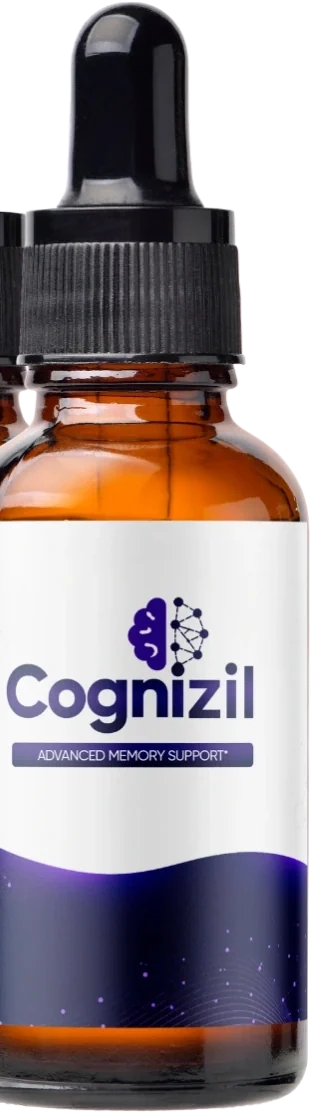
Cognizil is a one-millilitre daily liquid. Its label publishes a full Supplement Facts panel — and puts twenty-one ingredients inside a single 15.47 mg figure without saying how it divides.
The brief we were given said this product had no published panel and no phone number. The bottle has both. Here is what else the two disagreed about.
Split evenly that is 0.737 mg each. It is not split evenly, and the label does not say how it is split.
One dropperful a day, 30 ml to a bottle, 30 days. The panel quantifies one thing: 7 micrograms of chromium. Everything else shares a 15.47 mg proprietary blend — an average of 0.737 mg each if it were split evenly.
Grant every assumption in the product’s favour, including the label’s own 20:1 extract claim, and fourteen of the sixteen ingredients with a researched dose still cannot reach it. Packs run from $49 to $79 a bottle.
- The full panel, transcribed as text
- Every dose claim carries its citation
- Three pack prices, printed plainly
- No reviews published as verified
Cognizil at a glance
Everything a buyer checks first. Two of these rows are better than the brief led us to expect, and one of them is the reason this site exists.
| What | Cognizil |
|---|---|
| Product class | Dietary supplement, liquid |
| Net contents | 1 oz / 30 ml |
| Serving size | 1 ml, one dropperful |
| Servings per container | 30 |
| Days per bottle | 30 |
| Quantified ingredients | 1 — chromium, 7 mcg |
| Ingredients not quantified | 21, sharing 15.47 mg |
| Average, if split evenly | 0.737 mg each |
| Label claim | ADVANCED MEMORY SUPPORT* |
| Prices | $79, $69 or $49 a bottle, by pack |
| Guarantee | 180 days on the sales page kits |
| Phone | +1 (877) 257 0710 — printed on the bottle, not on the sales page |
| Distributed by | Cognizil, PO Box 12730, Ogden, UT 84404 |
| Who it is for | Adults 18 and over. Not for use if pregnant or nursing |
| Verified reviews | None published |
| Lot reference | COG-26/GO-1410 — a reference, not a test result |
Two things here are better than the written brief implied. It said no typed milligram list existed and told us not to invent a panel; the artwork contains a complete one. It said there was no public phone number; the bottle prints one. Both are published here.
Fifteen milligrams, twenty-one ways
This is the whole argument, and it is division.
This chart is not an estimate of what is in the bottle. It is the most that can be, with two generous assumptions granted at once — and the conclusion survives both.
Fourteen of the sixteen ingredients with a verified researched dose cannot reach it, even here. The two that do — grape seed and guarana — reach only the bottom of their studied ranges, and only because we credited the extract multiplier in full.
The shortfalls run from 1.5× at the best to 6,787× at the worst. That is four orders of magnitude, which is why the default scale on this chart is logarithmic: on a linear scale the fourteen short bars would be a single indistinguishable smear at the far end.
Added the other way round: the lowest researched dose of every ingredient that has one totals 25.9 grams. The blend is 15.47 milligrams. It would need to be about 1,673 times larger.
Nothing on that chart estimates what is in the bottle. It grants the most generous reading the label allows and shows that the conclusion does not depend on being harsh. The full working is on the best case page.
What the label prints
Supplement Facts
Serving Size: 1ml
Servings Per Container: 30
Maca (Lepidium meyenii) Root Extract^, African Mango (Irvingia Gabonesis) Seed Extract*, Grape (Vitis vinifera) Seed Extract^, Guarana (Paullinia Cupana) Seed Extract^, Eleuthero (Eleutherococcus senticosus) Root Extract^, Astragalus Membranaceus Root Extract^, Green Tea Leaf Extract^, Gymnema Sylvestre Leaf Extract^, Forskohlii (Coleus forskohlii) Root Extract^, Cayenne Pepper (Capsicum annuum) Fruit Extract^, Grapefruit (Citrus Paradisi) Seed^, Ginseng (Panax Ginseng) Root Extract, Raspberry Ketones, L-glutamine, L-Tyrosine, L-Arginine, Beta Alanine, Monoammonium Glycyrrhizinate, GABA (Gamma Aminobutyric Acid), L-Tryptophan, L-Carnitine HCl.
Not a significant source of saturated fat, trans fat, cholesterol, sodium, dietary fiber, total sugars, added sugars, protein, Vitamin D, calcium, iron, or potassium.
* Percent Daily Value (DV) are based on a 2,000 calorie diet.
† Daily Value (DV) not established.
^ Sourced from a concentrate with a 20:1 extract equivalent.
* Sourced from a concentrate with a 10:1 extract equivalent.
Other Ingredients: Water, Natural flavors, Potassium Sorbate, Stevia, Xylitol, Citrus Extract.
Transcribed from the label wrap supplied to this website.
That is the whole panel, transcribed from the supplied label wrap. It is unusual to be able to publish one in this category and it deserves the credit before anything else on this site argues with it.
The twenty-one
The evidence behind each one →The one that needs its own page →Cautions and interactions →
Four numbers
The fourth figure is the most generous reading available: every ingredient at its maximum, with the label’s own extract multiplier granted in full.
Pros and cons
What this label does well
- A full label wrap with a real Supplement Facts panel
- Three pack prices, printed plainly, with a per-bottle figure
- A 180-day window on the sales page kits, which is unusually long
- A distributor name, a street address, a phone number and an email on the bottle
- An Other Ingredients line, so the sweeteners and preservative are disclosed
- Extract ratios printed, which most labels in this category do not bother with
- The chromium row’s arithmetic is correct: 7 mcg is exactly 20% of the Daily Value
What it does not
- Twenty-one ingredients share 15.47 mg with no split disclosed
- Fourteen of the sixteen with a researched dose cannot reach it, best case
- Seven of the twenty-one are amino acids dosed in grams in every trial
- Raspberry ketones have no human trial at supplement doses at all
- Grapefruit seed is on the panel, and the published analytical work on commercial grapefruit seed extract raises a serious question
- Gymnema, forskohlii, African mango and cayenne are metabolic ingredients on a memory label
- No independent testing of any kind was supplied
Our editorial score
A full label wrap with a Supplement Facts panel, a serving size, an Other Ingredients line, a distributor address, a phone number and an email. It is a real label, and it is better than the brief implied.
One dietary ingredient is quantified. Twenty-one share a single 15.47 mg figure. This is the lowest score we can give.
A one-millilitre serving carrying twenty-one extracts and amino acids. Fourteen of the sixteen with a researched dose cannot reach it even on the most generous reading of the label.
Panax ginseng, guarana, grape seed and L-tyrosine all have real literature. Raspberry ketones have no human trial at all, and the guarana meta-analysis called its own pooled effect less than trivial.
Gymnema and forskolin are metabolic ingredients. African mango is a weight-loss ingredient. Astragalus is studied in kidney disease. On a memory label.
Grapefruit seed is on this panel, and the published analytical work on commercial grapefruit seed extract found synthetic preservatives doing the work in the products tested. We cannot say what is in this one, and neither can the label.
Three pack prices, printed plainly, with a per-bottle figure. After two builds with no price at all, this is a genuine strength.
A 180-day window on the sales page kits is unusually long, and there is a phone number on the bottle. There is no retailer order desk.
Eight supplied entries. Two sentences between them. Four of each, word for word.
Nine rows. This product prices better than either of the labels we looked at before it, and doses worse than both.
How to take it
The label’s instruction is three sentences: “Shake well before each use. Take 1 dropperful daily. Place in mouth and swallow.”
Shake it, properly
This is a suspension of plant extracts in water. Anything that settles has to be redistributed or the first and last doses in a bottle are not the same thing. This instruction is doing real work.
One dropperful is one millilitre
That is what the panel measures. If your dropper has graduations, use them; if it does not, fill it to the same point every day.
Pick a time and keep it
The label does not specify one. Attach it to something you already do without thinking — a habit is a more reliable cue than an hour.
Store it away from heat and light
The label says so, and for a liquid of plant extracts that is more than boilerplate. A cupboard, not a windowsill.
Cognizil price and packs
Real prices, printed plainly. The only comparison that works is cost a day.

Two bottles
60 ml · 60 days
$158$79 a bottle
$2.63 a day
- 2 bottles, 60 ml in total
- 60 days at the label serving
- $79 a bottle
- 180-day window on the sales page kits


Three bottles
90 ml · 90 days
$207$69 a bottle
$2.30 a day
- 3 bottles, 90 ml in total
- 90 days at the label serving
- $69 a bottle
- 180-day window on the sales page kits

Six bottles
180 ml · 180 days
$294$49 a bottle
$1.63 a day
- 6 bottles, 180 ml in total
- 180 days at the label serving
- $49 a bottle
- 180-day window on the sales page kits
Those are the prices printed on the sales page supplied to this website. No single-bottle price was supplied, and no shipping figure was either. The day counts and the cost a day are ours, and they are division: 30 ml a bottle, 1 ml a day, 30 days a bottle.
What do Cognizil reviews say?
The seller supplied a set of review figures. We publish them as the seller’s figures and audit them, because the eight supplied entries use two sentences between them — four of each, word for word.
No verified customer review appears anywhere on this site, and no review or rating schema is emitted on any page, so no star rating from this site will appear in a search result.
Common questions
What is Cognizil?
A liquid dietary supplement sold in the United States by Gocognizil as an authorised Cognizil retailer. The bottle holds 1 oz / 30 ml, the serving is 1 ml taken as one dropperful, and the label counts 30 servings to a bottle. The front prints “ADVANCED MEMORY SUPPORT*”.
Does Cognizil publish a Supplement Facts panel?
Yes. The written brief supplied with this build said a typed milligram list was not on the sales page and told us not to invent a panel. The artwork in the same folder contains a full label wrap with a complete panel on it. We transcribed the panel that exists rather than inventing one, and the supplement facts page shows it in full.
What is in the blend?
Twenty-one ingredients sharing 15.47 mg: maca, African mango, grape seed, guarana, eleuthero, astragalus, green tea, gymnema, forskohlii, cayenne, grapefruit seed, panax ginseng, raspberry ketones, L-glutamine, L-tyrosine, L-arginine, beta alanine, monoammonium glycyrrhizinate, GABA, L-tryptophan and L-carnitine HCl, in that printed order.
How much of each is in a serving?
Not published, and not legally required to be. What can be worked out is an upper bound for each position, because the law requires blend ingredients to be listed heaviest first. The best case page does that and then grants the label's own extract-ratio claims on top.
Is 15.47 mg a lot?
No. Split twenty-one ways it averages 0.737 mg each. For comparison, the lowest dose used in the research behind these ingredients adds up to about 25.9 grams — roughly 1,670 times the whole blend.
Is there evidence any of this improves memory?
For a few ingredients there is real literature, and for several there is none in humans at all. Panax ginseng's 2024 meta-analysis found a small effect on memory and nothing on overall cognition, attention or executive function. Guarana's meta-analysis called its pooled effect less than trivial. Raspberry ketones have no human trial. It is all on the ingredients page with citations.
Can 15.47 mg do anything?
For a handful of very potent compounds a milligram-scale dose is meaningful. None of the twenty-one ingredients here is in that category: the amino acids are dosed in grams, the botanicals in hundreds of milligrams. Fourteen of the sixteen with a researched dose cannot reach it even on the most generous reading of this label.
Does the 20:1 extract claim fix that?
It helps two ingredients and does not rescue the rest. Granting the multiplier in full, grape seed and guarana reach the bottom of their studied ranges. The other fourteen still fall short, by between 1.5 times and nearly 6,800 times.
See the Cognizil packs
Two, three or six bottles, priced plainly, with a 180-day window on the sales page kits. Read the best case first, then decide.
Shipping is calculated at checkout. This site publishes no figure it was not given.
References
Every source below was opened and read. Nothing here cites a study we did not read, and no identifier on this site was written from memory.
- U.S. Government Publishing Office21 CFR 101.36 — Nutrition labeling of dietary supplements — eCFR.gov · source
- U.S. Food and Drug AdministrationDietary Supplement Labeling Guide: Chapter IV, Nutrition Labeling — FDA.gov · source
- U.S. Food and Drug AdministrationDaily Value and Percent Daily Value: Changes on the New Nutrition and Supplement Facts Labels — FDA.gov · source
- U.S. Food and Drug AdministrationGrapefruit Juice and Some Drugs Don’t Mix — FDA.gov · source
- U.S. Food and Drug AdministrationFDA Calls on Certain Firms to Stop Producing and Issuing Misleading ‘FDA Registration Certificates’ — FDA.gov · source
- Booker, Frommenwiler, Reich et al. — 2022Understanding plant to extract ratios in botanical extracts — Frontiers in Pharmacology · DOI 10.3389/fphar.2022.981978 · source
- Shin, Lee, Yang, Lim & Ernst — 2010Maca (L. meyenii) for improving sexual function: a systematic review — BMC Complementary and Alternative Medicine · PMID 20691074 · source
- Ngondi, Etoundi, Nyangono et al. — 2009IGOB131, a novel seed extract of the West African plant Irvingia gabonensis, significantly reduces body weight and improves metabolic parameters in overweight humans — Lipids in Health and Disease · PMID 19254366 · source
- Centre for Reviews and DisseminationThe efficacy of Irvingia gabonensis supplementation in the management of overweight and obesity: a systematic review of randomized controlled trials — NCBI Bookshelf (DARE) · NBK132337 · source
- Zhang, Liu, Li et al. — 2016The impact of grape seed extract treatment on blood pressure changes: a meta-analysis of 16 randomized controlled trials — Medicine (Baltimore) · PMID 27537554 · source
- Congretel, Bonnet, Gaudel et al. — 2023Effect of Guarana (Paullinia cupana) on Cognitive Performance: A Systematic Review and Meta-Analysis — Nutrients · PMID 36678305 · source
- European Medicines Agency, Committee on Herbal Medicinal ProductsAssessment report on Eleutherococcus senticosus (Rupr. et Maxim.) Maxim., radix — ema.europa.eu · source
- Schaffler, Wolf & Burkart — 2013No benefit adding Eleutherococcus senticosus to stress management training in stress-related fatigue/weakness, impaired work or concentration — Pharmacopsychiatry · PMID 23740477 · source
- Pop, Cherecheș, Buzoianu et al. — 2021Standardized astragalus extract for attenuation of the immunosuppression induced by strenuous physical exercise: randomized controlled trial — Journal of the International Society of Sports Nutrition · PMID 34271953 · source
- Zhang, Lin, Xu, Leung & Chan — 2014Astragalus (a traditional Chinese medicine) for treating chronic kidney disease — Cochrane Database of Systematic Reviews · CD008369.pub2 · source
- European Food Safety Authority — 2018Scientific opinion on the safety of green tea catechins — EFSA Journal · DOI 10.2903/j.efsa.2018.5239 · source
- National Institute of Diabetes and Digestive and Kidney DiseasesGymnema, in LiverTox: Clinical and Research Information on Drug-Induced Liver Injury — NCBI Bookshelf · NBK610217 · source
- Godard, Johnson & Richmond — 2005Body composition and hormonal adaptations associated with forskolin consumption in overweight and obese men — Obesity Research · PMID 16129715 · source
- Henderson, Magu, Rasmussen et al. — 2005Effects of Coleus forskohlii supplementation on body composition and hematological profiles in mildly overweight women — Journal of the International Society of Sports Nutrition · PMID 18500958 · source
- Zsiborás, Matics, Hegedűs et al. — 2023The effects of capsaicin intake on weight loss among overweight and obese subjects: a systematic review and meta-analysis of randomised controlled trials — British Journal of Nutrition · PMID 36938807 · source
- Takeoka, Dao, Wong, Lundin & Mahoney — 2001Identification of benzethonium chloride in commercial grapefruit seed extracts — Journal of Agricultural and Food Chemistry · PMID 11453769 · source
- Avula, Dentali & Khan — 2007Simultaneous identification and quantification by liquid chromatography of benzethonium chloride, methyl paraben and triclosan in commercial products labeled as grapefruit seed extract — Die Pharmazie · PMID 17867553 · source
- Zeng, Li, Wang et al. — 2024Effects of Ginseng on Cognitive Function: A Systematic Review and Meta-Analysis — Phytotherapy Research · PMID 39474788 · source
- Operational Supplement Safety, Consortium for Health and Military PerformanceRaspberry ketone dietary supplements for weight loss — opss.org · source
- Gleeson — 2008Dosing and efficacy of glutamine supplementation in human exercise and sport training — Journal of Nutrition · PMID 18806122 · source
- Deijen & Orlebeke — 1994Effect of tyrosine on cognitive function and blood pressure under stress — Brain Research Bulletin · PMID 8293316 · source
- McNeal, Meininger, Wilborn et al. — 2018Safety of dietary supplementation with arginine in adult humans — Amino Acids · PMID 29858688 · source
- Collier, Casey & Kanaley — 2005Growth hormone responses to varying doses of oral arginine — Growth Hormone & IGF Research · PMID 15809017 · source
- Trexler, Smith-Ryan, Stout et al. — 2015International Society of Sports Nutrition position stand: Beta-Alanine — Journal of the International Society of Sports Nutrition · PMID 26175657 · source
- Joint FAO/WHO Expert Committee on Food AdditivesGlycyrrhizinic acid — evaluation and intake guidance — WHO JECFA database · source
- Hepsomali, Groeger, Nishihira & Scholey — 2020Effects of oral gamma-aminobutyric acid (GABA) administration on stress and sleep in humans: a systematic review — Frontiers in Neuroscience · DOI 10.3389/fnins.2020.00923 · source
- Sutanto, Loh, Kim & Kim — 2021The impact of tryptophan supplementation on sleep quality: a systematic review, meta-analysis, and meta-regression — Nutrition Reviews · PMID 33942088 · source
- NIH Office of Dietary SupplementsCarnitine — Health Professional Fact Sheet — ods.od.nih.gov · source
- NIH Office of Dietary SupplementsChromium — Health Professional Fact Sheet — ods.od.nih.gov · source
- U.S. Food and Drug AdministrationQuestions and Answers on Dietary Supplements — FDA.gov · source